
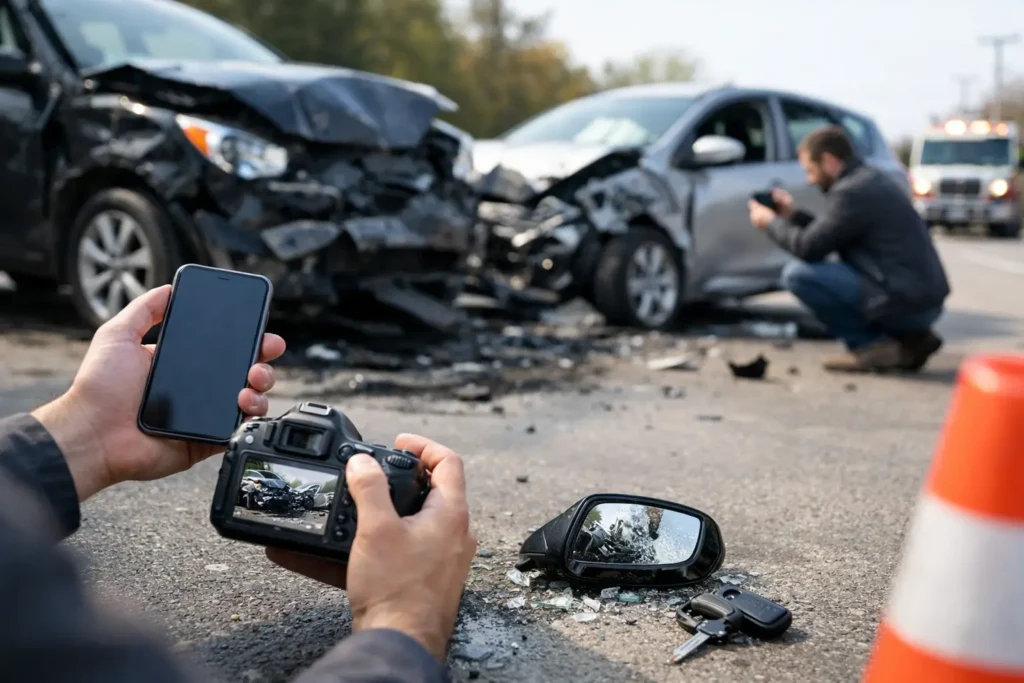
Why preserving crash evidence matters so much
After a motor vehicle collision, the evidence starts changing almost immediately. Skid marks fade. Debris gets cleared. Security camera footage may be overwritten within days. Vehicles are repaired, sold, or destroyed. Witnesses forget details or become difficult to reach.
Insurance companies know this. They often begin evaluating a claim before an injured person has had time to understand the full extent of the damage. If the available proof is thin, they may argue that the crash was less serious, that your injuries were preexisting, or that you were partly at fault. Preserving evidence early helps protect you from those arguments.
There is also a practical side to this. Even when liability seems obvious, cases involving serious injuries, commercial vehicles, disputed lane changes, intersection collisions, or uninsured drivers often turn on details. The more complete the record, the stronger your position.
How to preserve crash evidence at the scene
If you are physically able and it is safe to do so, start documenting the scene before the vehicles are moved. Do not put yourself in danger to get a better photo. Safety and medical care come first.
Use your phone to take wide and close-up photos of everything you can. Capture the position of the vehicles, damage to each car, license plates, shattered glass, debris, skid marks, traffic signs, lane markings, weather conditions, and any visible injuries. Take more photos than you think you need. A blurry or incomplete set can leave out an important detail.
Video can also help, especially if it shows the full roadway layout, nearby businesses, obstructed views, or traffic light placement. If the other driver seems impaired, aggressive, or unusually apologetic, do not argue. Just document what you can and wait for law enforcement.
Get the other driver’s name, contact information, insurance details, license plate number, and vehicle information. If there are witnesses, ask for their names and phone numbers. A witness who seems willing to talk at the scene may be much harder to find later.
Call police and make sure a report exists
A police report is not the whole case, but it is often one of the first documents insurers review. Call law enforcement and cooperate with the basic investigation. Give accurate facts, but do not guess about speed, distance, or fault if you are unsure.
If you are taken from the scene for medical care, find out how to obtain the report later. Save the report number if an officer provides it. If the report contains mistakes, do not ignore them. Errors about location, vehicle position, or party information can create problems down the road.
Protect the digital evidence people forget about
Many modern crashes involve electronic evidence that is easy to overlook. Dash cam recordings, vehicle event data recorder information, GPS history, rideshare app records, cell phone photos, text messages, and timestamps can all matter.
Back up your phone photos and videos right away. Email them to yourself, upload them to cloud storage, or save copies in more than one place. If your vehicle has a dash cam, remove and preserve the recording before it loops over older footage. If a family member or passenger recorded anything, ask them to save their files too.
For serious collisions, commercial trucking cases, or disputed liability cases, black box data can be especially valuable. That information may show speed, braking, steering input, and other pre-impact details. But access to it often requires prompt legal action. Waiting too long can mean the data is lost, inaccessible, or challenged.
Do not repair, clean, or discard key physical evidence too soon
One of the biggest mistakes people make is fixing the problem before documenting it. If your vehicle is badly damaged, try to preserve it in its post-crash condition until it has been thoroughly photographed and, in some cases, inspected. This is particularly important in crashes involving product defects, airbag failures, trucking collisions, or claims that the damage pattern proves how the crash happened.
The same rule applies to personal items. Keep damaged car seats, helmets, clothing, shoes, glasses, and phones. Do not wash bloodstains out of clothes or throw away torn items just because they are upsetting to look at. They may later help show the force of impact or the nature of your injuries.
This is not always convenient. Storage costs and repair needs are real concerns. But before authorizing disposal or major repairs, it is wise to understand whether the vehicle or other items may need to be examined.
Medical records are crash evidence too
People often think only about the roadway evidence, but your medical timeline is just as important. Go to the doctor as soon as possible after the crash, even if your symptoms seem manageable at first. Some injuries take hours or days to become obvious.
Follow through with recommended treatment and keep copies of everything – discharge papers, imaging results, prescriptions, referrals, work restrictions, and bills. Save mileage to appointments and notes about how your injuries affect daily life. If pain keeps you from sleeping, lifting your child, driving, or returning to work, write that down.
Gaps in treatment can become a problem. Insurers may argue that you were not badly hurt or that something else caused your condition. Consistent medical documentation helps connect the crash to your injuries in a way that is much harder to dispute.
Watch what you say to insurers and online
Preserving evidence also means avoiding statements that damage your case. Report the crash to your insurer, but be careful with recorded statements, especially if the other driver’s insurer contacts you early. You are not required to speculate, minimize your pain, or accept blame in a rushed conversation.
Social media can create similar issues. A photo from a family event, a post saying you are “fine,” or comments about the crash can be taken out of context. Even private accounts are not always truly private for litigation purposes. The safest move is to stay off social media while your claim is pending or keep your activity extremely limited.
When a lawyer can help preserve crash evidence
Some cases are straightforward. Others are not. If the crash involved severe injuries, a fatality, a commercial truck, a company vehicle, a road hazard, a defective part, or unclear fault, getting legal help early can make a real difference.
An attorney can move quickly to identify and preserve evidence that an injured person may not know exists. That can include surveillance footage from nearby businesses, 911 recordings, vehicle data, employer records, maintenance logs, driver qualification files, and formal preservation notices sent to prevent destruction of evidence.
This early work matters most when the stakes are high. In Pennsylvania and New Jersey, where busy roads and commercial traffic create complex crash patterns, waiting too long can narrow your options. A law firm like Kunnel Law can step in to protect the evidence while you focus on medical care and your family.
A simple rule to follow after any serious wreck
If you are unsure whether something matters, save it. Save the photo, the damaged item, the receipt, the voicemail, the witness contact, and the medical document. It is much easier to sort through too much evidence later than to rebuild a case after important proof has disappeared.
The strongest injury claims are often built in the first days after a collision, long before settlement talks begin. Giving yourself that protection early can make the road ahead a little more stable at a time when very little feels certain.