
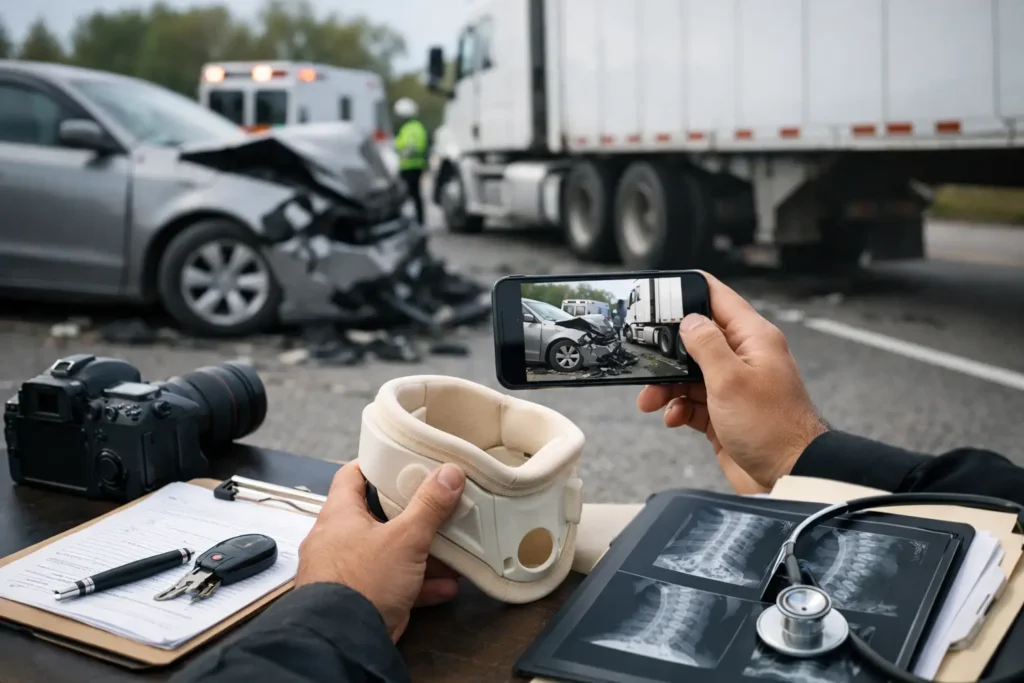
Why Truck Accident Evidence Disappears Quickly
Trucking companies and their insurers often begin investigating immediately after a serious collision. Their representatives may inspect the vehicles, photograph the scene, communicate with the driver, and develop their own account of fault. Injured people deserve the same opportunity to investigate, but they may be in the hospital or dealing with pain, trauma, and lost income.
Not every missing record is intentional. Dash camera footage may record over itself. Electronic logging data can be replaced through normal system use. A damaged vehicle may be repaired, sold, or destroyed. Roadway debris disappears, tire marks fade, and witnesses become harder to locate as time passes.
Preserving evidence does not mean you must prove your entire case at the scene. It means acting carefully, documenting what you can safely document, and getting legal help before vital information is gone.
Best Evidence for a Truck Accident Claim
The strongest cases usually do not rest on one photograph or one witness statement. They are built from several forms of evidence that tell a consistent story about the crash, the truck driver’s actions, and the trucking company’s responsibilities.
The Police Report and First-Responder Records
A police report can identify the parties involved, note initial observations, document citations, and list witnesses. Fire and EMS records may also establish the severity of the collision, the condition of the vehicles, and statements made at the scene.
These documents are valuable starting points, not necessarily the final word on fault. Officers often arrive after the collision and may not have access to the truck’s electronic data, company records, or every witness account. A thorough investigation can reveal facts the initial report could not capture.
Photos, Video, and Physical Damage
Photos from the crash scene can preserve details that are impossible to recreate later. Images of vehicle positions, lane markings, traffic signals, damaged guardrails, debris fields, skid marks, weather conditions, and visible injuries may help experts reconstruct the collision.
Video can be especially powerful. Nearby businesses, homes, traffic cameras, and other vehicles may have captured the crash or the moments leading up to it. Truck-mounted dash cameras may show driver behavior, road conditions, or the collision itself. The value of video depends on its quality and angle, but even partial footage can help confirm a timeline.
Physical damage matters, too. The location and pattern of impact on both vehicles can reveal speed, direction of travel, braking, underride, or whether a truck changed lanes unsafely. Do not authorize disposal of your vehicle until you understand whether it may be important evidence.
Electronic Logging Devices and Truck Data
Most commercial trucks use electronic systems that can record information about operation and driver activity. Depending on the vehicle and equipment involved, evidence may include hours-of-service logs, GPS location history, speed data, braking events, engine information, and electronic logging device records.
This data can help answer important questions: Was the driver exceeding permitted driving hours? Was the truck moving too fast for traffic or weather conditions? Did the driver brake before impact? Was the truck where the driver claimed it was?
Electronic records require context. A data point alone may not establish negligence. When considered alongside video, vehicle damage, driver logs, and expert analysis, however, it can be highly persuasive.
Driver Qualification and Employment Records
A truck driver’s record may show whether the carrier hired, trained, supervised, and retained that driver responsibly. Relevant materials can include the driver’s commercial license status, medical certification, training records, prior violations, disciplinary history, drug and alcohol testing records, and prior crash information where legally relevant.
A prior issue does not automatically prove fault in a new crash. Still, these records may expose a larger safety failure, such as inadequate training, ignored warnings, or a carrier allowing an unqualified driver behind the wheel.
Inspection, Maintenance, and Repair Documents
Commercial trucks must be inspected and maintained. Failed brakes, worn tires, defective lights, steering problems, and unsecured components can turn an avoidable issue into a devastating collision.
Maintenance logs, driver vehicle inspection reports, repair invoices, and post-crash inspection findings can show whether a mechanical defect contributed to the crash. Liability may extend beyond the driver when a trucking company, maintenance vendor, manufacturer, or another party failed to meet its responsibilities.
Cargo and Loading Evidence
Improperly loaded or secured cargo can make a truck unstable, increase stopping distance, or cause a trailer to shift or roll over. Bills of lading, weight tickets, cargo securement records, loading dock video, and statements from loading personnel may identify whether cargo played a role.
This is one reason truck accident claims can involve more than one defendant. The company that loaded the trailer may be different from the company that owned the truck or employed the driver.
Witness Statements and Expert Analysis
Independent witnesses can offer details that technology cannot always provide. They may have seen a truck drift across lanes, follow too closely, run a light, use a phone, or drive erratically before the impact. Their memories are generally most useful when recorded promptly.
In complex or catastrophic cases, accident reconstruction experts may analyze vehicle damage, road evidence, electronic data, and scene measurements. Medical experts can explain how the collision caused specific injuries and how those injuries may affect work, mobility, and future care. Their work helps connect the evidence to the real harm a family has suffered.
What You Can Do After a Truck Crash
Your health comes first. Seek emergency treatment and follow your medical provider’s recommendations, even if symptoms seem manageable at first. Head injuries, internal injuries, and soft-tissue damage may not be obvious in the hours after a violent collision.
If you are physically able and it is safe, take photos and videos, get names and contact details for witnesses, and keep copies of any paperwork you receive. Write down what you remember as soon as you can, including what the truck was doing before the crash and any statements you heard afterward.
Avoid guessing about fault or giving a recorded statement to the trucking insurer before you understand your rights. Insurers may ask questions designed to narrow or weaken a claim. Be truthful, but consider speaking with counsel first, particularly when injuries are serious.
Keep medical bills, discharge instructions, prescription receipts, wage-loss information, and notes about how your injuries affect daily life. These materials help document damages, but they also show the human cost that a vehicle damage estimate cannot capture.
A Lawyer Can Preserve the Evidence You Cannot Access
Most of the best evidence for a truck accident is not available to an injured driver or passenger without legal action. A lawyer can send preservation notices requesting that the trucking company retain the truck, electronic data, camera footage, driver records, inspection documents, and communications related to the crash. Counsel can also investigate every potentially responsible party and work with qualified experts when the facts require it.
Pennsylvania and New Jersey cases can involve different procedural rules, insurance questions, and deadlines. Waiting too long can affect both the evidence available and your ability to pursue compensation. A prompt case review gives you a clearer picture of what should be protected and what your next step should be.
At Kunnel Law, we understand that a truck crash can change a family’s life in seconds. You do not have to carry the investigation, paperwork, and insurer pressure alone. Getting informed help early can protect the evidence and give you room to focus on healing.