
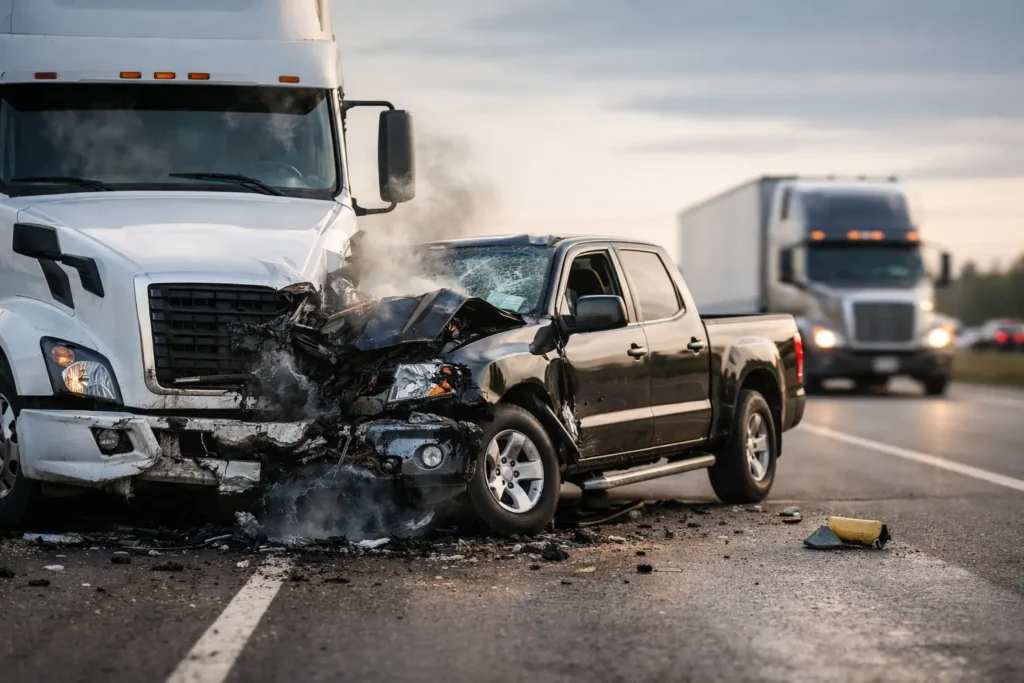
Driver Fatigue and Hours-of-Service Violations
Long-haul trucking places real pressure on drivers to meet delivery schedules. Federal rules limit driving and on-duty hours and require rest breaks, but a logbook does not always tell the whole story. A driver who is fatigued may drift across lanes, fail to brake in time, miss traffic signals, or make poor decisions in heavy traffic.
Fatigue can arise even when a driver appears to be within formal hours-of-service limits. Poor sleep, untreated sleep apnea, back-to-back shifts, demanding schedules, and pressure from dispatchers can all affect alertness. Electronic logging devices, dispatch messages, fuel receipts, toll records, dash camera footage, and the truck’s onboard data may help show whether fatigue played a role.
Distracted Driving Behind the Wheel
A few seconds of inattention are especially dangerous when a truck is moving at highway speed. Commercial drivers may be distracted by texting, calls, a navigation device, an onboard computer, paperwork, food, or adjusting equipment in the cab. Looking away from traffic for even a short distance can eliminate the time needed to avoid a stopped vehicle or slowing line of traffic.
Cell phone evidence can be particularly significant after a collision. A phone record may establish whether a call, text, or data activity occurred around the time of impact. However, a record alone does not automatically prove the driver was actively using a device, so it must be evaluated with other evidence, including witness accounts and vehicle data.
Speeding, Following Too Closely, and Unsafe Lane Changes
Large trucks need far more room to stop than cars. Speeding reduces the driver’s available reaction time and increases the force of a collision. It is also dangerous for a truck to travel too fast for conditions, even when the vehicle is below the posted speed limit. Rain, snow, fog, construction zones, poor visibility, and congested Philadelphia-area traffic can all require lower speeds and greater following distance.
Tailgating is a common factor in rear-end truck crashes. A driver may be unable to stop when traffic suddenly slows, particularly if the truck is loaded or traveling downhill. Unsafe lane changes create another serious risk. Tractor-trailers have substantial blind spots along both sides and directly behind the trailer. Still, blind spots are not an excuse to merge without checking mirrors, signaling, and ensuring the lane is clear.
Impaired Driving and Medication Use
Alcohol and illegal drugs can impair judgment, coordination, and reaction time. Commercial drivers are subject to strict rules concerning alcohol and controlled substances, yet impairment remains a potential cause of catastrophic crashes.
Prescription and over-the-counter medications can also affect safe driving. Some drugs cause drowsiness, blurred vision, dizziness, or delayed reactions. The key question is not simply whether a driver took medication. It is whether the medication impaired the driver’s ability to operate the truck safely and whether the driver or employer ignored a known risk.
Poor Truck Maintenance and Equipment Failures
Not every truck collision begins with a decision made in the cab. Worn brakes, underinflated or defective tires, broken lights, steering problems, unsecured trailers, and faulty coupling equipment can turn an otherwise manageable situation into a disaster.
Trucking companies have a duty to inspect, repair, and maintain their vehicles. Drivers also conduct pre-trip and post-trip inspections and are expected to report defects. Maintenance invoices, inspection reports, repair histories, driver vehicle inspection reports, and the truck’s physical condition may reveal that a known problem was ignored or that required maintenance was delayed.
Brake failures deserve careful investigation, but they do not always mean a single part suddenly failed. The cause may involve inadequate inspections, worn components, improper adjustments, excessive loads, or a maintenance contractor’s poor work. Determining responsibility requires a close review of the truck and its records.
Improperly Loaded or Secured Cargo
Cargo shifts can cause a truck to sway, jackknife, roll over, or lose control during braking and turns. Overloaded trucks may require longer stopping distances and place excessive strain on tires and brakes. Cargo that falls into the roadway can also create a separate hazard for nearby drivers.
The trucking company is not always the only party involved in loading. A warehouse, shipper, freight broker, or third-party loading company may have handled the cargo. Liability depends on the contracts, the parties’ actual roles, applicable safety requirements, and what each party knew or should have known about the load.
Inadequate Training, Supervision, or Hiring
Commercial driving requires more than a license. Drivers need training on vehicle inspections, defensive driving, braking distance, turning radius, blind spots, cargo safety, and operating in difficult weather. An inexperienced driver placed behind the wheel of a large commercial vehicle without proper support can put everyone on the road at risk.
A trucking company may also be responsible if it hires a driver with a concerning safety history, fails to verify qualifications, ignores repeated violations, or allows unsafe conduct to continue. Company policies, personnel records, training documents, prior incident reports, and safety ratings can become important evidence.
This issue is often more complicated than it first appears. A past driving violation does not necessarily establish that an employer was negligent, and a company cannot be held liable simply because a crash occurred. But a documented pattern of unsafe driving or ignored warning signs may be highly relevant.
Dangerous Road Conditions and Other Drivers
Truck drivers must account for road conditions, but they cannot control every hazard. Potholes, poorly marked work zones, missing signs, inadequate lighting, and unsafe roadway design can contribute to a crash. Another motorist may cut off a truck, stop abruptly, drive while impaired, or create an emergency the truck driver could not reasonably avoid.
These facts matter because fault may be shared among several parties. Pennsylvania and New Jersey have different rules that can affect how shared fault influences a recovery. That is one reason a thorough investigation matters before anyone accepts an insurer’s version of events.
Evidence That Can Disappear After a Truck Crash
The days after a collision can shape a legal claim. A trucking company may have access to the truck, trailer, electronic data, driver records, and internal communications. Some electronic information is routinely overwritten, and damaged vehicles may be repaired or placed back into service.
A prompt investigation may seek to preserve evidence such as the truck’s event data recorder, electronic logs, GPS information, dash camera video, inspection reports, maintenance records, dispatch communications, cargo documentation, driver qualification files, police reports, scene photographs, and witness statements. Medical documentation is equally important because it connects the crash to the injuries, treatment, missed work, and lasting effects on daily life.
What to Do After a Truck Collision
Your health comes first. Call 911, accept medical evaluation, and follow up with a doctor even if symptoms initially seem manageable. Head injuries, internal injuries, and soft-tissue damage may not be obvious at the scene.
If you can do so safely, photograph the vehicles, roadway, debris, skid marks, weather conditions, and visible injuries. Get contact information from witnesses and avoid discussing fault with the truck driver, company representatives, or insurance adjusters. Do not sign a statement, medical authorization, or settlement document before you understand what rights you may be giving up.
A serious truck crash can leave a family confronting medical bills, lost income, pain, and an uncertain future while powerful companies begin protecting their own interests. Kunnel Law helps injured people and families pursue accountability with the personal attention and determined advocacy those circumstances demand. Taking action early can help protect the evidence needed to tell the full story of what happened.