
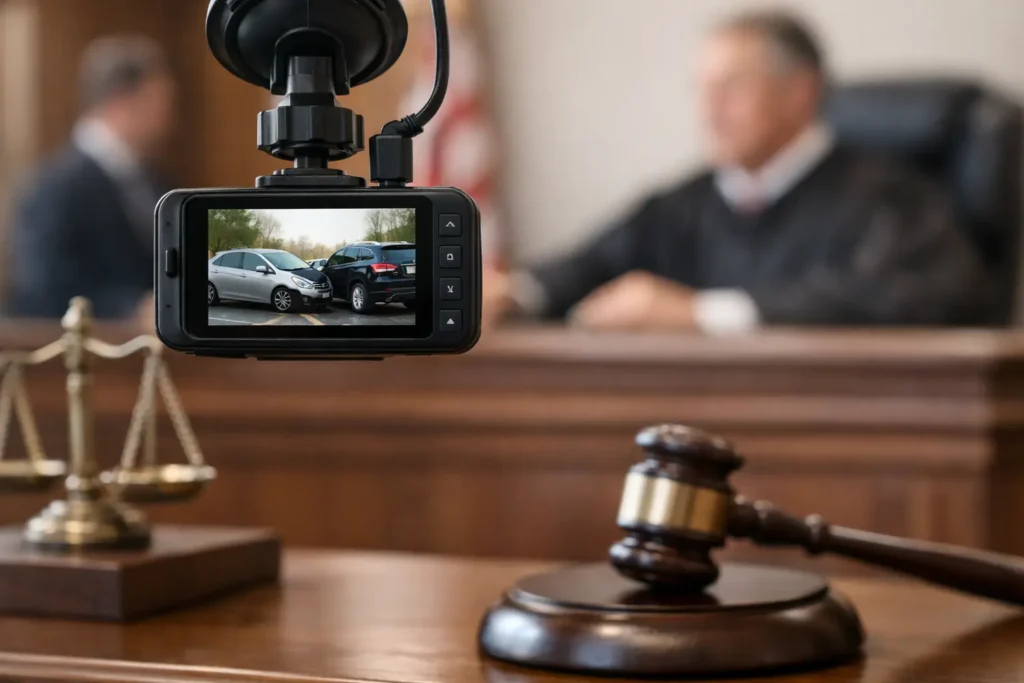
Why dashcams in court can matter after a crash
Most motor vehicle cases turn on fault. The other driver may say you changed lanes without warning, ran a stop sign, followed too closely, or caused the impact another way. An insurance company may rely on a police report, vehicle damage, and statements made during a stressful moment at the scene.
Dashcam footage can test those claims against what the camera recorded. It may show traffic signals, lane markings, weather, vehicle speed, the position of the cars before impact, or unsafe conduct such as tailgating. In trucking cases, it may document a commercial vehicle making an improper turn, failing to yield, or traveling too fast for conditions.
Video can also protect an injured person from an unfair allegation of shared fault. Pennsylvania and New Jersey both allow injured people to seek compensation when another party was negligent, but the amount recovered can be affected if the defense proves the injured person shared responsibility. Clear footage may make it much harder to shift blame onto the person who was hurt.
Still, a camera records an angle, not the whole story. A forward-facing dashcam may show a vehicle entering an intersection but not the driver approaching from behind. It may not capture a turn signal, a blind spot, road defects, or the actions that occurred moments before the recording begins. That is why strong cases often combine video with witness accounts, police records, photographs, vehicle data, medical evidence, and, when necessary, accident reconstruction.
What makes dashcam footage usable as evidence?
Courts do not simply play every clip offered by a party. Like other evidence, dashcam video generally must be relevant and properly authenticated. In plain terms, the party offering it must be able to show that the footage is what they claim it is and that it fairly depicts the event at issue.
The person who owns or operated the camera can often explain where it was mounted, how it worked, when the recording was made, and whether the file accurately shows the collision. Metadata, timestamps, GPS information, and the original memory card may also help establish authenticity. A witness who saw the crash can sometimes confirm that the footage fairly represents what occurred.
The original recording matters. Many dashcams record in a loop, overwriting older footage once storage is full. Downloading only a short social-media-ready clip can create unnecessary questions about whether earlier or later footage was omitted. Preserve the full file, the device or memory card when practical, and information about the camera model and settings.
A timestamp that is wrong by an hour does not necessarily make a video useless. Many cameras are not updated after daylight saving time or a battery failure. But it can create an issue that needs to be explained with other evidence. The same is true of edited, enhanced, slowed-down, or captioned video. Those versions may be useful for review, but the unaltered original is the safer starting point.
Audio can require extra care
Audio is not always necessary to prove a crash claim, and it can complicate matters. Pennsylvania has strict laws governing the interception of certain private oral communications. Whether an in-car recording raises a legal concern depends on the circumstances, including whether people had a reasonable expectation of privacy and how the recording was made. New Jersey law differs in important ways.
Do not delete or alter audio on your own if the recording may be evidence. Preserve it, then let your attorney assess how it should be handled. A legal team can determine whether the audio is useful, whether it presents a privacy issue, and how to protect the admissibility of the video.
What to do when a dashcam recorded your accident
The first hours after a crash are often consumed by medical care, insurance calls, and getting a damaged vehicle home. Yet video evidence can disappear quickly. Take a few practical steps as soon as your health and safety allow.
First, save the recording before the dashcam overwrites it. Copy the full video file to more than one secure location, but keep the original card or device unchanged. Avoid trimming the recording, adding music or narration, applying filters, or posting it online. A post can be shared out of context and may give the other side an opportunity to challenge your credibility.
Next, preserve a wider window of footage than you think you need. Save the minutes before and after impact, not only the moment of collision. The lead-up can show traffic flow, a driver’s erratic behavior, or the color of a traffic light. The aftermath may capture the positions of the vehicles, statements by those involved, or conditions at the scene.
Then document where the footage came from. Write down the camera make and model, the vehicle in which it was installed, who operated it, whether it was functioning normally, and the approximate time and location of the crash. Keep screenshots only as supplements, not replacements for the original file.
If another driver, a witness, a business, or a commercial truck may have video, act quickly. Nearby stores, homes, transit vehicles, and traffic cameras sometimes capture a collision, but many systems automatically erase footage after days or weeks. An attorney can send a preservation request to put a potential holder of relevant evidence on notice before it disappears.
When the other side has the dashcam footage
A dashcam is not helpful only when it belongs to you. The at-fault driver may have one. So might an employer if the crash involved a delivery van, company car, rideshare vehicle, or tractor-trailer. In a serious trucking collision, onboard cameras and telematics data can be especially important because they may reveal speed, braking, hours of service, lane departures, or driver distraction.
The challenge is that you may not be able to access that evidence without a legal process. An insurer is not required to simply hand over everything because you ask. Early legal representation can make a real difference. Counsel can identify likely sources of electronic evidence, demand preservation, and pursue the material through appropriate discovery when a lawsuit is necessary.
It is also possible that footage appears damaging at first. A video may show that you were speeding slightly, looking away briefly, or reacting imperfectly to a dangerous situation. That does not automatically end a claim. The legal question is whether another party acted negligently and whether any conduct by the injured person contributed to the harm. Context matters: a driver who faced a sudden hazard created by someone else may have had little time to respond.
A video cannot show the full cost of an injury
Fault is only one part of a personal injury case. Even unmistakable dashcam footage does not, by itself, establish the value of a claim. The injured person must still show the physical, financial, and personal consequences of the collision.
Medical records can establish the nature of injuries and the treatment required. Employment information may show missed work and reduced earning capacity. Testimony from family members, treating providers, and other experts may help explain pain, limitations, future care needs, and the impact on daily life. For someone with a traumatic brain injury, spinal injury, burns, or other catastrophic harm, this evidence is often central to achieving a fair recovery.
Insurance companies sometimes treat video as a shortcut: if the crash looks minor on camera, they may minimize the injury. But vehicle movement and visible damage do not tell the whole medical story. Some injuries are not obvious at the scene and worsen over time. Prompt medical evaluation and careful documentation remain essential.
Protect the evidence before the story gets rewritten
A dashcam can turn a disputed crash into a clearer case, but only if the footage survives, can be verified, and is placed in the full context of the evidence. Do not assume an insurer will interpret the video fairly, and do not let a looping camera erase a recording that could protect your future.
After a serious Pennsylvania or New Jersey crash, your priority should be getting proper medical care. Once you are safe, preserve every available recording and seek legal guidance promptly. Kunnel Law helps injured people investigate what happened, protect critical evidence, and pursue the accountability and compensation their families need to move forward.