
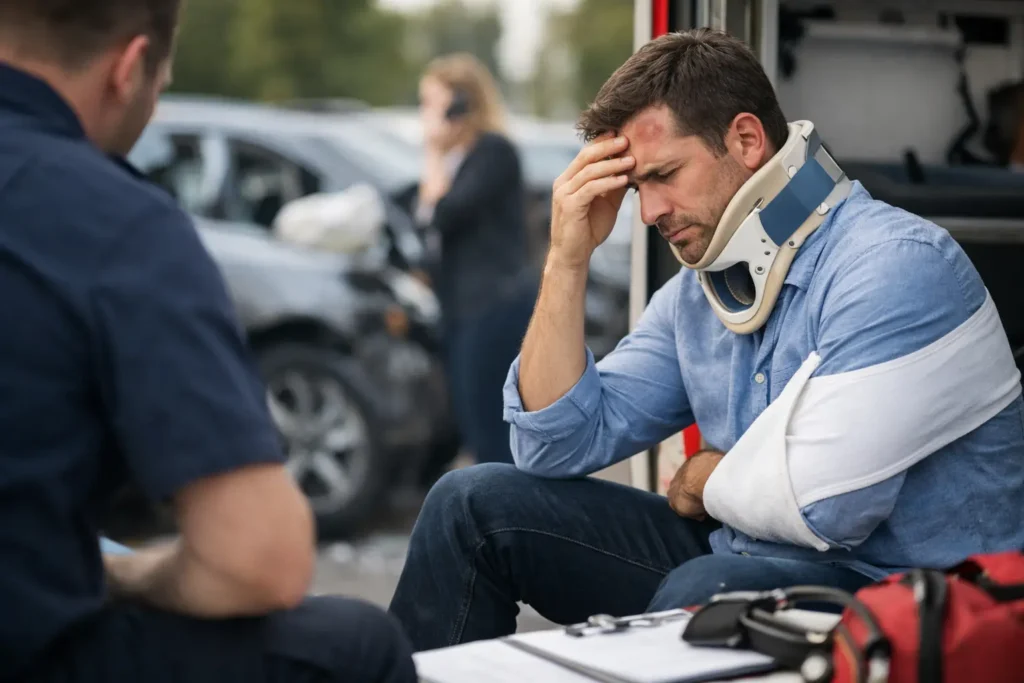
What to do after a car accident injury at the scene
If you are physically able, move to a safe location and call 911. Even if the crash seems straightforward, a police response matters. The responding officer may document the drivers involved, road conditions, vehicle damage, statements made at the scene, and other details that become important later.
Accept medical attention if it is offered. Many people refuse help because they are shaken up, worried about cost, or convinced they are fine. That can be a mistake. Injuries such as concussions, soft tissue damage, back injuries, and internal bleeding do not always show immediate symptoms.
If you can do so safely, gather basic information. Get the other driver’s name, contact information, insurance information, license plate number, and vehicle make and model. Take photos of the vehicles, the surrounding area, debris, skid marks, traffic signs, and any visible injuries. If there are witnesses, ask for their names and phone numbers.
Keep your words measured. Be polite, but do not apologize or guess about fault. A simple statement like “I’m hurt” or “I need medical attention” is very different from speculating about what caused the crash. In the confusion after an accident, people often say things that do not reflect what really happened.
Get medical care even if you think you can wait
One of the most damaging mistakes after a crash is delaying treatment. Insurance companies pay close attention to gaps in care. If you wait days or weeks to see a doctor, they may argue that you were not seriously hurt or that something else caused your condition.
That does not mean every person needs an ambulance ride from the scene. It does mean you should be evaluated promptly. Depending on the circumstances, that could be an emergency room, urgent care, your primary doctor, or a specialist referral. The right setting depends on your symptoms. Chest pain, head trauma, loss of consciousness, severe pain, numbness, weakness, or trouble breathing should never be treated as minor.
Follow through with the care plan you are given. Attend appointments, fill prescriptions, complete imaging, and follow recommendations for physical therapy or specialist treatment. If your treatment is inconsistent, the insurance company may use that against you.
Document more than just the damage to the car
A strong injury claim is built on evidence, and some of the most valuable evidence never appears in a repair estimate. Save every medical record, discharge paper, bill, prescription receipt, and appointment summary. Keep copies of imaging results and physician notes if available.
It also helps to keep a simple written record of your recovery. Note your pain levels, sleep problems, missed work, mobility issues, headaches, emotional distress, and the activities you can no longer do normally. This kind of day-to-day documentation can help explain the real impact of an injury in a way that medical charts alone often cannot.
If your employer requires documentation for missed time, save that too. Lost wages are often a major part of an accident claim, especially when injuries keep someone out of work for weeks or longer.
Be careful when dealing with insurance companies
You should report the accident to your own insurer promptly, but keep the conversation factual and brief. Provide the basic details of when and where the crash happened. Do not guess about speed, fault, or the extent of your injuries before you have been fully evaluated.
The other driver’s insurance company may contact you quickly, sometimes within a day or two. They may sound helpful and sympathetic. That does not mean they are looking out for you. Their goal is often to limit what the company pays.
Be especially cautious about recorded statements. In many cases, people agree to them without realizing how their words may later be used. The same is true of quick settlement offers. Early offers may seem tempting when medical bills are starting to arrive, but accepting too soon can leave you without enough compensation if your condition gets worse or treatment lasts longer than expected.
Why fault is not always as simple as it looks
Many injured drivers assume liability is obvious because the other car hit them. Sometimes that is true. Sometimes it is not. Rear-end crashes, intersection collisions, multi-vehicle accidents, trucking cases, and crashes involving bad weather or roadway defects can raise factual disputes very quickly.
Pennsylvania and New Jersey also have different insurance rules that can affect available claims, medical coverage, and limitations on pain and suffering recovery. That is one reason local legal guidance matters. What applies in one state may not apply the same way in the other, and the details of your own policy can also change the picture.
This is where early investigation helps. Photos, surveillance footage, black box data, witness statements, and vehicle inspections can become harder to obtain with time. Waiting too long may mean critical evidence disappears.
When to talk to a lawyer after a car accident injury
Not every minor crash requires legal representation. But if you suffered more than a temporary ache, if liability is disputed, if multiple vehicles were involved, or if the insurer is delaying, denying, or minimizing your claim, it is smart to speak with a lawyer early.
An attorney can help preserve evidence, handle insurer communications, assess available insurance coverage, calculate damages, and identify issues you may not know to look for. That can include future medical care, diminished earning capacity, or third-party liability beyond the other driver.
This matters even more in serious injury cases. A broken bone, surgery, spinal injury, traumatic brain injury, or long-term disability changes the value and complexity of a claim. Once a case is undervalued early, it can be difficult to undo the damage.
For injured people in Pennsylvania and New Jersey, working with a firm that handles high-stakes injury cases can make a practical difference, not just a legal one. The right team should communicate clearly, move quickly, and take pressure off your family while you focus on healing.
Mistakes that can hurt your case
Some errors are easy to avoid once you know what to watch for. Missing medical appointments, posting about the accident on social media, repairing or disposing of key evidence too quickly, and signing insurance documents without review can all create problems.
Social media is particularly risky. A single photo or casual post can be taken out of context to suggest you are less injured than you claim. Even private accounts are not necessarily private in the way people assume.
Another common mistake is underestimating your own injury. People try to push through pain because they need to work, take care of children, or keep life moving. That is understandable. But trying to act normal too soon can both worsen your condition and weaken the record showing how seriously the accident affected you.
What compensation may include
A car accident injury claim may involve more than current medical bills. Depending on the facts, compensation can include future treatment costs, lost wages, lost earning capacity, pain and suffering, out-of-pocket expenses, and damage to your quality of life.
The value of a case depends on several factors, including the severity of the injury, the length of recovery, whether permanent limitations remain, the strength of the liability evidence, and the insurance coverage available. There is no honest one-size-fits-all number.
That is why quick online estimates and casual advice from friends are often misleading. Two people can have similar crashes and very different legal outcomes because their medical histories, policy limits, work losses, and long-term prognosis are not the same.
The next right step matters
If you are dealing with pain, missed work, and calls from insurance adjusters, you do not need to have every answer today. You do need to make smart early decisions. Get medical care, protect the evidence, be careful with insurance communications, and get legal guidance before a temporary problem becomes a permanent financial one.
After a serious crash, the goal is not just to get through the week. It is to protect your recovery, your stability, and your ability to move forward with real support behind you.