
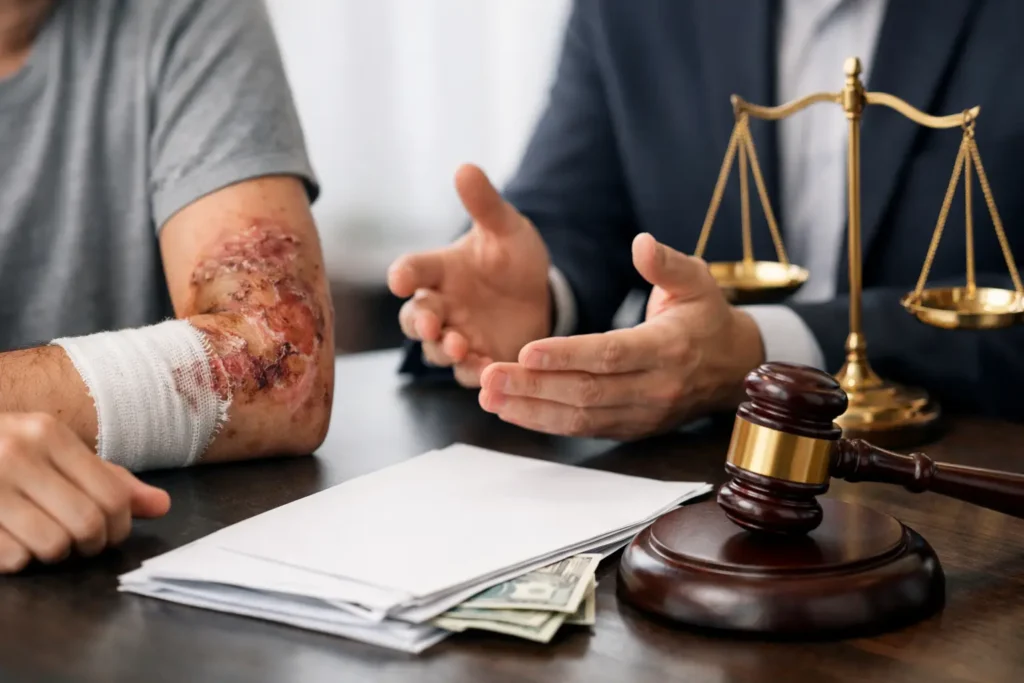
What burn injury settlement factors usually matter most
The biggest factor is often the severity of the burn itself. First-degree burns may heal with limited treatment, while second-degree and third-degree burns can require hospitalization, skin grafts, infection monitoring, rehabilitation, and long-term follow-up care. In the most serious cases, a victim may face nerve damage, reduced mobility, permanent scarring, or disfigurement.
That medical reality affects settlement value in a direct way. The more extensive the treatment, the more likely the claim includes emergency transportation, hospital stays, surgeries, medication, wound care, physical therapy, and future medical expenses. A case involving permanent impairment will usually be evaluated very differently than one involving a short recovery.
But the size of the medical bill is not the whole picture. Burn injuries are often among the most painful injuries a person can suffer. Ongoing pain, emotional trauma, sleep disruption, anxiety, depression, and the psychological effect of visible scarring can all be part of a claim. If the injury changes a person’s ability to work, parent, socialize, or live independently, those losses matter too.
Liability can raise or lower a burn injury claim
Even a devastating injury does not automatically produce a high settlement. One of the most important burn injury settlement factors is liability, meaning who caused the injury and whether that can be proven.
If a landlord ignored electrical hazards, an employer failed to follow safety rules, a driver caused a crash that led to a fire, or a manufacturer sold a defective product that exploded or overheated, those facts can strongly support a claim. The clearer the negligence, the stronger the settlement position tends to be.
On the other hand, disputes about fault can reduce value or delay resolution. Insurance companies look for ways to argue that the injured person shares responsibility, that the danger was obvious, or that something else caused the burn. In Pennsylvania and New Jersey, the details matter because comparative fault rules can affect how much compensation is available. That is one reason early investigation is so important.
Evidence often decides how seriously a claim is treated
Strong evidence gives a burn case leverage. Photos of the scene and the injuries, witness statements, incident reports, medical records, expert opinions, safety violations, and proof of a defective product can all help show what happened and why.
Timing matters here. Burn scenes can be cleaned up. Defective items can disappear. Surveillance footage can be erased. Witness memories can fade. If key evidence is lost, an insurer may argue there is not enough proof to support the claim, even where the injury itself is severe.
Medical treatment shapes the value of the case
Insurance carriers and defense lawyers often study treatment records closely. They want to know how bad the injury was, whether the care was consistent, whether the doctors expect full recovery, and whether the person will need future treatment.
A burn injury that requires debridement, grafting, reconstructive surgery, infection treatment, pain management, and rehabilitation usually presents a very different damages profile than a burn treated with outpatient care alone. Future care also matters. Some burn victims need scar revision procedures, compression garments, counseling, occupational therapy, or accommodations at home or work.
Gaps in treatment can create problems, but real life is not always neat. Some people miss appointments because they cannot drive, cannot afford time off, or are overwhelmed. That does not erase the injury. It does mean the claim needs to be presented carefully, with context that explains the medical course honestly.
Scarring and disfigurement are not minor issues
Visible burns can affect nearly every part of a person’s life. Scarring on the face, hands, arms, or other exposed areas may alter self-confidence, relationships, and employment opportunities. For some victims, the emotional impact lasts far longer than the initial wound healing.
This is one area where settlement value can vary widely. The age of the victim, the location of the scars, the likelihood of improvement, and the effect on daily life all matter. A defense insurer may try to treat scarring as cosmetic. For the injured person living with it every day, it is often much more than that.
Lost income and future earning ability matter
Many burn victims cannot return to work right away. Some can return, but only with restrictions. Others are never able to go back to the same job, especially in physically demanding work, manufacturing, transportation, food service, warehouse labor, or construction.
That makes wage loss a major part of many claims. Past lost wages are usually the starting point, but future lost earning capacity can be even more significant. If the injury limits movement, causes chronic pain, increases sensitivity to heat, or creates infection risks, the person’s work future may change in a lasting way.
Younger workers often face especially high long-term losses because the impact can stretch across decades. At the same time, older workers close to retirement may still have substantial claims if the injury forced an early exit from the workforce or reduced pension-related income.
The cause of the burn can change the legal path
Not all burn cases are built the same way. A house fire, workplace explosion, chemical exposure, trucking collision, restaurant accident, or defective appliance claim may involve different defendants, insurance policies, and legal standards.
That affects settlement potential. A straightforward auto claim may be limited by available insurance coverage, even if the injuries are catastrophic. A product liability case may require technical expert analysis but could involve broader avenues of recovery. A workplace burn may involve workers’ compensation issues, but in some situations there may also be a third-party claim against a contractor, property owner, equipment company, or manufacturer.
This is where broad assumptions can mislead people. Two victims may have burns that look similar on paper, but the legal value of their claims may differ sharply depending on how the injury happened and what sources of recovery exist.
Insurance coverage matters, but it is not the only issue
People often assume settlement value depends only on the severity of the injury. Severity matters a great deal, but insurance limits and the defendant’s resources can also shape what is practically recoverable.
That said, a quick policy-limits analysis is not enough. There may be multiple liable parties, excess coverage, umbrella policies, commercial coverage, or third-party claims that are not obvious at first. In serious burn cases, a thorough review of every possible source of compensation is essential.
An insurer’s approach matters too. Some carriers evaluate catastrophic injury claims realistically. Others deny, delay, or minimize until they are forced to confront the full evidence. Trial readiness can influence that dynamic. When a law firm is prepared to push the case forward, the defense often treats the claim differently.
What can hurt a burn injury settlement
Some problems are avoidable, and some are not. Delaying medical care, giving recorded statements without legal guidance, posting about the accident on social media, failing to preserve evidence, or accepting a quick settlement before the full medical picture is known can all weaken a claim.
There are also challenges that are less obvious. Preexisting conditions may be used unfairly to argue the injury was not as serious as claimed. Independent medical exams may minimize pain or future limitations. Defense experts may say additional surgeries are optional rather than necessary. A strong claim often comes down to careful documentation and a clear, credible presentation of the victim’s real losses.
Why experienced legal guidance makes a difference
Burn cases are medically complex and emotionally heavy. They are also often contested. The insurance company may see a file number. The injured person sees skin grafts, missed paychecks, bandage changes, nightmares, and a body that may never feel the same again.
That gap matters. A properly prepared claim should account for both the economics and the human damage. It should tell the truth in a way that is supported by records, expert analysis, and evidence strong enough to stand up in negotiation or in court.
For families in Pennsylvania and New Jersey dealing with a serious burn injury, that usually means acting early, protecting evidence, following treatment, and getting clear answers about the claim before making any major decisions. Firms like Kunnel Law approach these cases with both urgency and compassion because clients need more than paperwork – they need someone ready to fight for the full value of what has been taken from them.
If you or someone you love is facing the aftermath of a burn injury, the right question is not just what the case is worth today. It is whether the claim reflects what this injury will truly cost over the months and years ahead.