
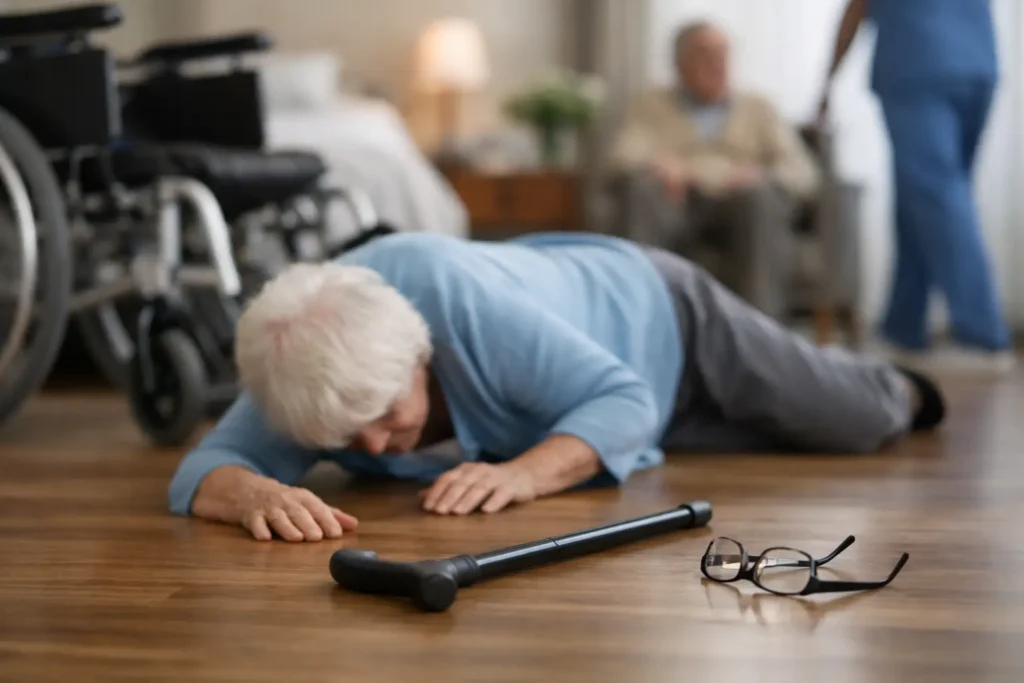
Why Nursing Home Falls Demand Careful Attention
Nursing home residents are more vulnerable to fall-related injuries than many other adults. Fragile bones, limited mobility, medication side effects, poor vision, and chronic health conditions can turn a short fall into a life-changing event. A resident who was walking with assistance before a fall may need surgery, rehabilitation, or long-term bed care afterward.
That vulnerability does not excuse unsafe conditions. Nursing homes have a duty to assess each resident’s fall risk, develop an individualized care plan, provide needed assistance, maintain a safe environment, and respond when a resident’s condition changes. The standard is not perfection. It is reasonable, attentive care based on what the facility knew or should have known about that person’s needs.
A single fall may be an accident. Repeated falls, vague explanations, delayed notifications, or a fall involving a resident who was supposed to be supervised deserve much closer scrutiny.
Top Causes of Nursing Home Falls
Inadequate Supervision and Staffing
Many nursing home falls occur when residents are left alone despite needing help with walking, transfers, toileting, or getting out of bed. A care plan may identify that a resident needs one or two staff members for transfers, frequent safety checks, or an escort to the bathroom. If no one is available when the resident calls for help, the resident may try to move without assistance.
Understaffing can create exactly these conditions. When too few trained employees are responsible for too many residents, call lights may go unanswered, scheduled rounds may be skipped, and employees may rush through transfers. Staffing problems do not always appear on a family visit, but they can become visible through unanswered call bells, residents left in hallways, frequent employee turnover, or explanations that staff were “busy.”
Poor Fall-Risk Assessments and Care Plans
A resident’s risk of falling is not fixed. It can increase after a hospitalization, medication change, infection, stroke, worsening dementia, or previous fall. Facilities should assess fall risk at admission and reassess it when circumstances change.
A generic care plan is not enough. If a resident is unsteady at night, the plan may need to address nighttime toileting and supervision. If the resident forgets to use a walker, the facility may need reminders, monitoring, or another intervention. If a resident has fallen before, the staff should investigate why it happened and adjust care accordingly.
When the same resident falls more than once for similar reasons, families should ask what changes were made after each incident. Repeating the same ineffective approach may be evidence that the facility failed to respond appropriately.
Unsafe Transfers and Mobility Assistance
Moving a resident from a bed to a wheelchair, from a wheelchair to a toilet, or from a chair to a standing position requires training and attention. Some residents need gait belts, mechanical lifts, non-slip footwear, or assistance from more than one caregiver. Others may become dizzy when standing and need time to regain balance.
Falls during transfers can result from using the wrong equipment, failing to lock wheelchair brakes, leaving a resident unattended on a toilet, or attempting a transfer without adequate help. A rushed transfer can be especially dangerous for a resident with weakness on one side of the body, recent surgery, or cognitive impairment.
Medication Errors and Unmonitored Side Effects
Medications can increase a resident’s fall risk by causing dizziness, drowsiness, confusion, low blood pressure, or impaired coordination. Sedatives, sleep medications, pain medications, blood pressure drugs, and certain psychiatric medications can all affect balance and alertness.
Medication use is not automatically negligent. Many residents genuinely need medications that carry risks. The question is whether providers prescribed and monitored them appropriately, whether staff gave the correct medication and dose, and whether the facility responded when side effects became apparent.
A resident who suddenly becomes disoriented, unusually sleepy, or unsteady needs assessment. Ignoring those changes can put that resident at serious risk.
Environmental Hazards
A safe facility environment matters because residents may have limited balance, poor vision, or difficulty reacting to hazards quickly. Wet floors, loose rugs, cluttered hallways, poor lighting, broken handrails, uneven surfaces, and misplaced medical equipment can all contribute to falls.
Environmental dangers may seem minor to a healthy visitor, yet be hazardous to a resident using a walker or wheelchair. A bathroom without accessible grab bars, a bed positioned too high, or a call light placed out of reach can force a resident into an unsafe situation.
Families should document visible hazards when possible. Photographs, dates, and notes about what staff said can become valuable if questions arise later about how the fall occurred.
Failure to Respond to Call Lights and Toileting Needs
Residents often fall while trying to get to the bathroom without help. Urgency, embarrassment, or a long wait for a call light response can lead someone to stand and walk when they have been instructed not to do so alone.
This is not merely a convenience issue. A facility that knows a resident needs assistance should have a practical plan for timely toileting support. That may include regular checks, scheduled bathroom visits, accessible call devices, and sufficient staff to answer residents promptly.
If a loved one says they wait a long time for help, take that concern seriously. It may signal a broader pattern of neglect rather than an isolated frustration.
Communication Failures Between Staff and Shifts
Safe care depends on information moving with the resident. Nursing aides, nurses, therapists, and physicians may each know something relevant to a resident’s fall risk. If one shift learns that a resident became weak or confused but does not communicate it to the next shift, needed precautions may not be taken.
Communication problems also arise when facilities fail to tell families about prior falls, medication changes, or new mobility restrictions. Families cannot advocate effectively when they do not have accurate information about their loved one’s condition.
What Families Should Do After a Nursing Home Fall
Ask for immediate medical evaluation, especially after a head strike, suspected fracture, new confusion, severe pain, or a change in behavior. Some injuries, including brain bleeds and fractures, may not be obvious right away.
Request a clear explanation of the incident. Ask where and when it happened, who was present, what the resident was doing, whether a call light was used, and what actions staff took afterward. Ask for copies of the incident report, care plan, medical records, medication administration records, and any post-fall assessment. Keep your own written timeline of calls, visits, injuries, and conversations.
It is also reasonable to ask whether the facility reviewed the fall and changed the resident’s care plan. A meaningful response should address the specific risk that led to the fall, not simply promise that staff will “be more careful.”
Do not feel pressured to accept a quick explanation if the facts do not add up. A facility may describe an event as unavoidable before a full review of staffing records, care notes, surveillance footage, and prior incidents has taken place.
When a Fall May Support a Neglect Claim
Not every nursing home fall creates a legal claim. An investigation may show that the facility followed an appropriate care plan and that the fall could not reasonably have been prevented. But a claim may be warranted when evidence shows the home failed to provide required assistance, ignored known fall risks, delayed medical attention, maintained unsafe conditions, or failed to revise care after earlier falls.
In Pennsylvania and New Jersey, the records created immediately after a fall can be critical. Families should act promptly, particularly when there are concerns about missing documentation, changing stories, or serious injury. An experienced nursing home neglect attorney can evaluate the evidence, identify whether care standards were violated, and handle the legal burden while the family focuses on their loved one.
Kunnel Law understands that a nursing home fall can leave families feeling angry, frightened, and uncertain about whom to trust. Careful legal review can help protect a vulnerable resident and seek accountability when negligent care caused preventable harm.
Your loved one deserves more than a vague explanation and a promise that it will not happen again. Ask questions, preserve what you can, and insist on the attentive care and dignity every nursing home resident is entitled to receive.